Money circulation from ancient times to 1918
The earliest coins found in Armenia date back to the 6th and 5th centuries BC. These are two silver diobols struck in the Ionian city of Miletus which have been found in the Erebuni excavation.
Coins have been used in Armenia since the 3rd century BC. During the Hellenistic age, military campaigns and cross-border trade facilitated the appearance of coins of Alexander the Great, as well as of Seleucid, Athenian, Parthian, Roman, and Cappadocian coins on to Armenian market.
Starting from the second half of the 3rd century BC, Armenian kings of the Yervandian dynasty began striking copper coins in Sophene which are the earliest Armenian coins known today.
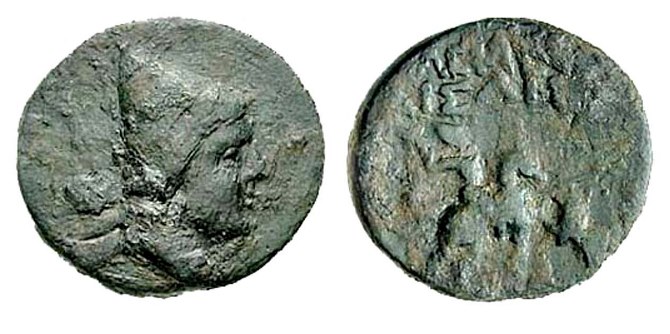
Pic 1. Kingdom of Sophene, King Arsames, third quarter of the 3rd century BC, a copper coin.
Obverse: the profile of King Arsames, wearing pointed tiara with drapes covering neck.
Reverse: the king on horseback, holding two spears in his left hand and hurling the third spear at a leaping lion; above – Greek inscription “BAΣIΛEΩΣ / APΣAMOY” (Of King Arsames).
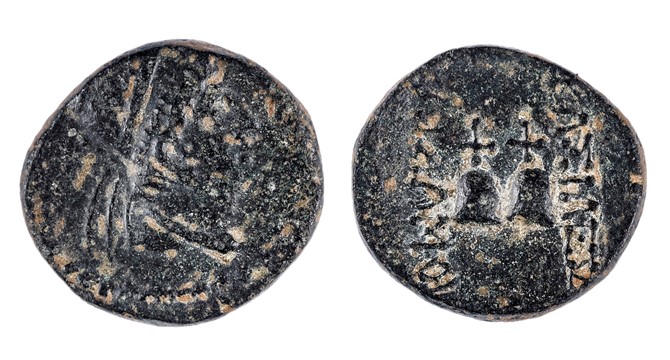
Pic 2. Kingdom of Sophene, King Arsames, third quarter of the 3rd century BC, a copper coin
Obverse: the profile of King Arsames.
Reverse: the hats of the Dioskouroi twins surmounted by crosses; on both sides – Greek inscription “ΒΑΣΙΛΕΩΣ ΑΡΣΑΜΟΥ” (Of King Arsames).
In the period of Artaxiad kingdom (189 BC - 1 AD), Armenian kings struck copper and silver coins in Greater Armenia. Under the reign of Tigran II the Great (95 - 55 BC), coins were minted in many cities of the kingdom including Artashat, Tigranakert, Mtsbin, and Antioch Damascus.
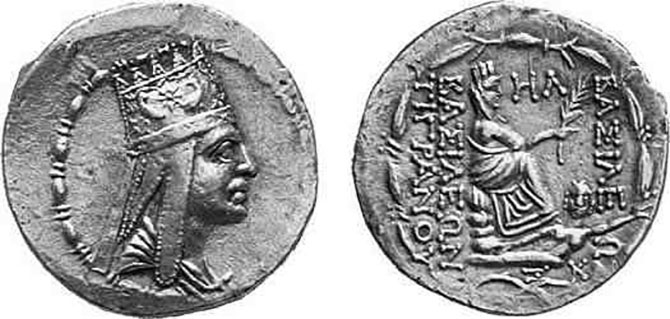
Pic 3. Greater Armenia, Artaxiad Kingdom, Tigranes II the Great, 95-55 BC, a silver tetradrachm
Obverse: The profile of King Tigranes II the Great wearing an Armenian tiara with five peaks decorated with a star between two eagles inverted and facing each other.
Reverse: The goddess Tyche wearing a wall-shaped crown and seated on a rock, holding a palm branch. At her feet, the god of Orontes river is swimming. Greek inscription: “BAΣIΛEΩΣ / BAΣIΛEΩN /TIΓPANOY” (Of King of Kings Tigranes).
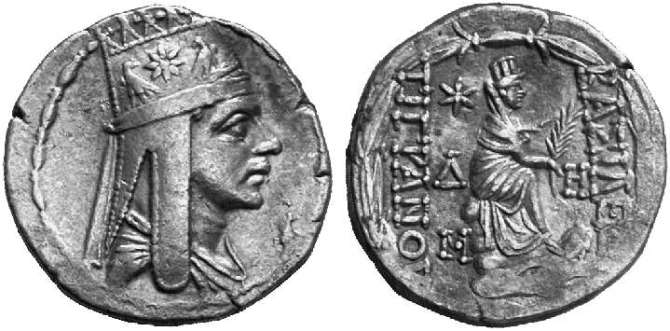
Pic 4. Greater Armenia, Artaxiad Kingdom, Tigranes II the Great, 95-55 BC, a silver tetradrachm
Obverse: The profile of King Tigranes II the Great wearing an Armenian tiara with five peaks decorated with a star between two eagles inverted and facing each other.
Reverse: The goddess Tyche, wearing a wall-shaped crown and seated on a rock, holding a palm branch. At her feet, the god of Orontes river is swimming. Greek inscription: “BAΣIΛEΩΣ / BAΣIΛEΩN /TIΓPANOY” (Of King of Kings Tigranes).
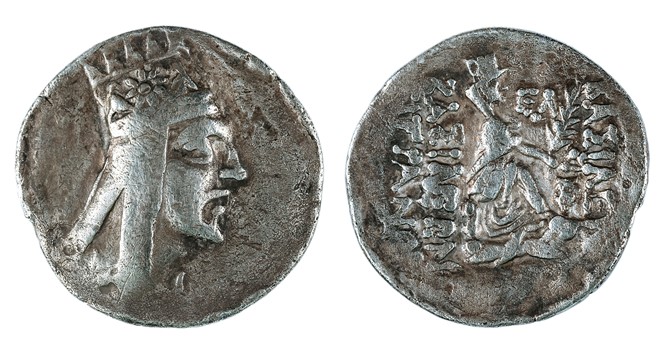
Pic 5. Greater Armenia, Artaxiad Kingdom, Tigranes II the Great, 95-55 BC, a silver drachm
Obverse: The profile of King Tigranes II the Great wearing an Armenian tiara with five peaks decorated with a star between two eagles inverted and facing each other.
Reverse: The goddess Tyche wearing a wall-shaped crown and seated on a rock, holding a palm branch. At her feet, the god of Orontes river is swimming. Greek inscription: “BAΣIΛEΩΣ / BAΣIΛEΩN /TIΓPANOY” (Of King of Kings Tigranes).
Engraves and inscriptions of the Armenian coins designed in the Hellenistic style were entirely in line with the spirit of the time. The coins normally depicted the portrait of the monarch on the obverse and mythological symbols as well as the king’s name and title on the reverse in Greek.
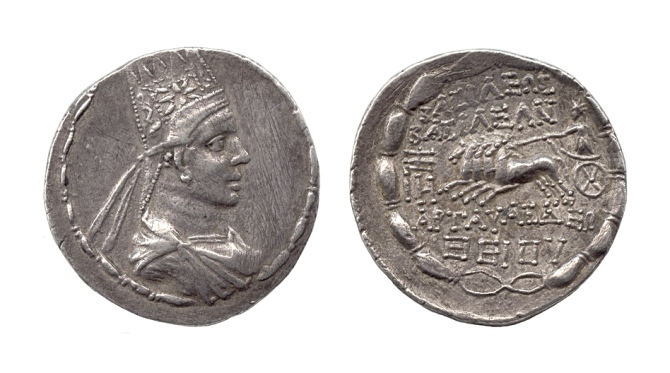
Pic 6. Greater Armenia, Artaxiad Kingdom, Artavasdes II, 55-34 BC, a silver tetradrachm
Obverse: The profile of King Artavasdes II wearing an Armenian tiara with five peaks decorated with a star.
Reverse: A crowned figure driving quadriga to the left, Greek inscription: “BAΣIΛEΩΣ / BAΣIΛEΩN / AΡTAΥAZΔOΥ / ΘΕΙΟΥ” (Of King of Kings Artavasdes, Heavenly).
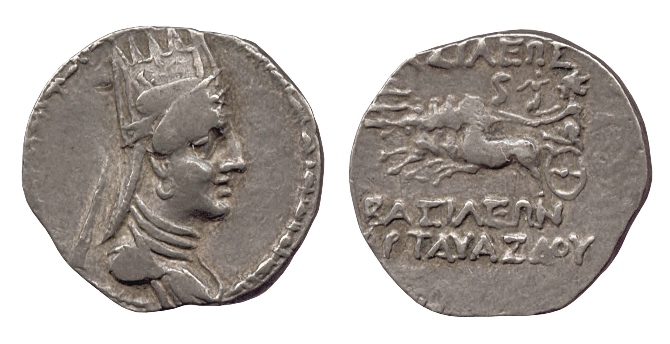
Pic 7. Greater Armenia, Artaxiad Kingdom, Artavasdes II, 55-34 BC, a silver drachm
Obverse: The profile of King Artavasdes II wearing an Armenian tiara with five peaks decorated with a star.
Reverse: A crowned figure driving quadriga, Greek inscription: “BAΣIΛEΩΣ / BAΣIΛEΩN / AΡTAΥAZΔOΥ” (Of King of Kings Artavasdes).
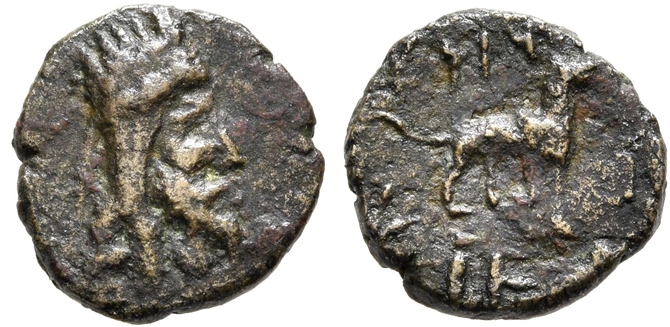
Pic 8. Greater Armenia, Artaxiad kingdom, Artaxias II, 30-20 BC, a copper coin
Obverse: The profile of King Artaxias II wearing an Armenian tiara with five peaks.
Reverse: An image of a dog, Aramaic inscription.
At the end of the Artaxiad regime, the municipal copper coins with depictions of Tikhve (Goddess of Artashat capital), ear of grain, and other images were minted and were unique examples that represented the Artashat coin mintage.
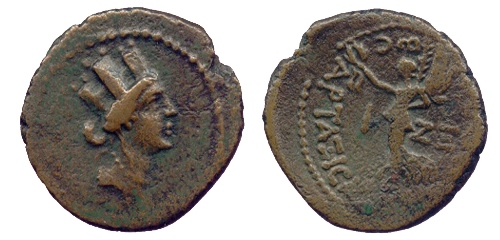
Pic 9. Artaxata inner-city issue, a copper coin
Obverse: The crowned profile of the city-goddess Tyche.
Reverse: The goddess Nike holding a wreath in her right hand, Greek inscription։ “APTAΞICATωN MHTPOΠOΛEωC” (From the community of the City Artaxata).
There were no particularly known coins from the Arsacid dynasty (66 - 428) on record. In the early period of the Arsacid dynasty, coins of the neighboring countries, the Roman Empire and Parthian Kingdom, were in circulation in Armenia.
The coins of the Sassanid Empire, Persia, were put into circulation in Armenia starting from the second half of the 3rd century, while the coins of the Byzantine Empire were put into circulation at the end of the 5th century.
After being conquered by the Arab Caliphate (second half of the 7th century), the coins of the Umayyads and later of the Abbasids were used in circulation in Armenia. Of the money of the Caliphate, silver dirhams, copper fals, and a very limited number of gold dinars were in circulation in Armenia.
At the end of the 10th century, Arabian silver dirhams were replaced by the Byzantine gold coins and copper follises which then took a leading role of money in the region. In the 11th and 12th centuries, the coins of Seljuk and other Muslim rulers began penetrating into circulation.
Coins were not struck during the reign of the Bagratid dynasty (885 - 1045), although there were copper coins issued under King Kyurike II (1048 - 1089), a descendant of the Bagratid dynasty reigning in a small kingdom of Tashir-Dzoraget. Those coins resembled the Byzantine copper follises although they had engraved names of the king. These are the first coins on record which bear Armenian inscriptions.
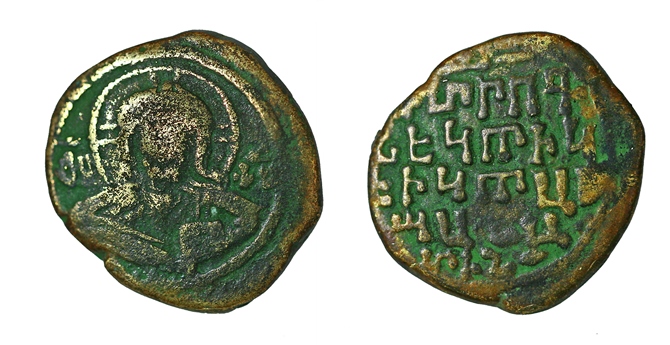
Pic 10. Armenian Kingdom of Tashir-Dzoraget, Kyurike II, 1048-1089, a copper coin
Obverse: The bust of Christ, holding the Gospels Book. Armenian inscription ՅՍ-ՔՍ (Jesus Christ).
Reverse: Armenian inscription: «+ՏՐ ՕԳՆԷ ԿՈՐԻԿԷԻ ԿՈՐԱՊԱՂԱՏԻՆ» (May the Lord help Kyurike the Kօuropalates).
At the end of the 11th century, an Armenian state was established in Cilicia which lasted around three hundred years (1080 - 1375). Under the princedom (1080-1198), some princes of the Rubenid dynasty issued copper coins influenced by Crusader-era illustrations in Armenian inscriptions. Under the kingdom (1198-1375), starting from the reign of King Levon I (1198-1219), a great number of coins were minted in silver and copper and, sometimes, in billon (an alloy with a smaller content of silver).
The silver coins were called “dram”, “tagvorin”, while copper coins – “dang”, “qartez”, “pogh”. The coins of Cilicia stand out for their original iconography that combined Armenian, European, and Oriental elements and for Armenian inscriptions. They all were cross-decorated.
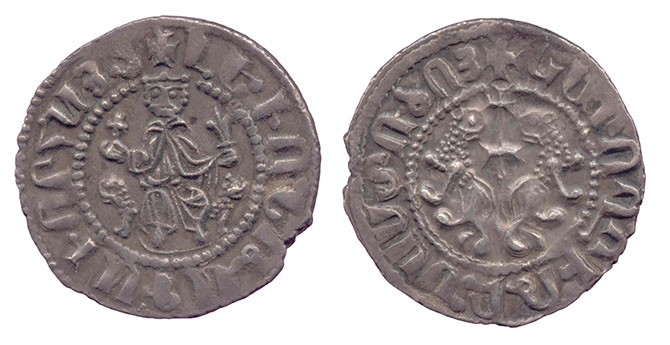
Pic 11. Cilician Armenian Kingdom, Levon I, 1198-1219, a silver dram
Obverse: King Levon I sitting on a lion-crowned throne, Armenian inscription: «ԼԵՒՈՆ ԹԱԳԱՒՐ ՀԱՅՑ» (Levon King of the Armenians).
Reverse: A cross between two lions, Armenian inscription: «+ԿԱՐՈՂՈՒԹԲՆ ԱՍՏՈ ՈՅ» (By the power of God).
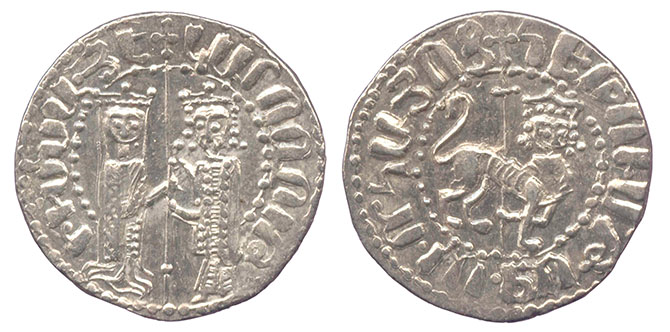
Pic 12. Cilician Armenian Kingdom, Hethum I, 1226-1269, a silver dram
Obverse: Queen Zabel and King Hetoum I holding a long-rodded cross, Armenian inscription: «ՀԵԹՈԻՄ ԹՈԳԱՒՈՐ ՀԱՅՈՑ» (Hetoum King of the Armenians).
Reverse: A crowned lion, holding a long-rodded cross, Armenian inscription: «+ԿԱՐՈՂՈԻԹԻՒՆՆ ԱՅԷ» (By the power of God).
Early in the 13th century, copper coins of Georgian kings, Queen Tamar in particular, were in circulation in the northern and eastern parts of Armenia. Coins of Mongolian khans appeared in circulation starting from the second half of the 13th century. These were silver dirhems, as well as copper fals in small numbers. Later, coins of different local Muslim dynasties were used in money circulation.
From the 16th century until the 1820s, coins of Iranian shahs dominated circulation in the eastern part of Armenia. There were copper, silver, and gold coins minted in many Iranian towns and Yerevan.
After the annexation of Eastern Armenia to the Russian Empire in 1828, the empire’s monetary issuance of gold, silver, and copper was put into circulation. The paper notes (banknotes) of the Russian Empire were introduced for the first time. In the aftermath of the February Revolution in 1917, the banknotes issued by Russia’s Provisional Government began circulating in Armenia.
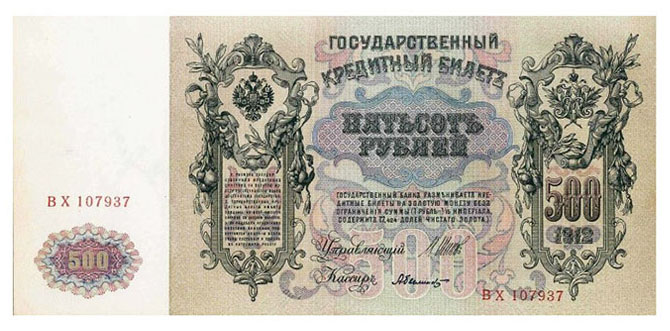
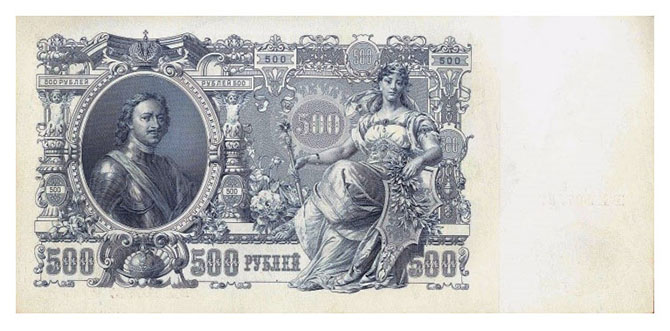
Pic 13. Russian Empire, a state credit note in 500 rubles denomination
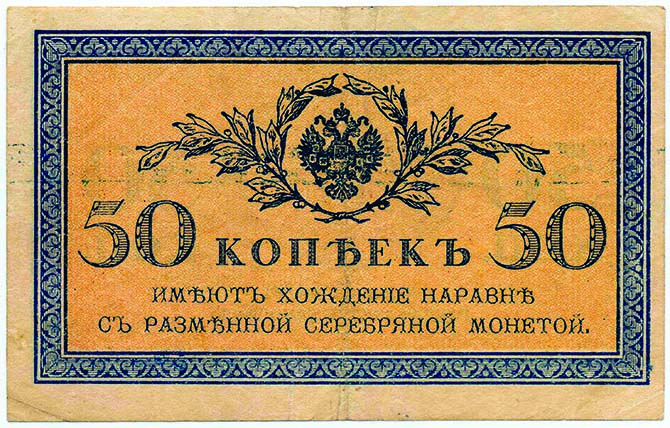
Pic 14. Russian Empire, a banknote in 50 kopecks denomination
More information related to this Section can be found in the Library of the Central Bank of Armenia:
- Խ. Ա. Մուշեղյան, Հայաստանի դրամական գանձերը, Հայկական ՍՍՀ ԳԱ, Հայաստանի պատմության պետական թանգարան, Երևան, 1973
- Paul Z. Bedoukian, Coinage of Cilician Armenia, American Numismatic Society, Danbury, Connecticut, 1979
- Խ. Ա. Մուշեղյան, Դրամական շրջանառությունը Հայաստանում (մ.թ.ա V դ. – մ.թ. XIV դ.), Հայկական ՍՍՀ ԳԱ, Հայաստանի պատմության պետական թանգարան, Երևան, 1983
- Ռ. Վարդանյան, Արտավազդ II-ի դրամները, Հայաստանի Հանրապետության Գիտությունների ազգային ակադեմիայի հնագիտության և ազգագրության ինստիտուտ և Հայաստանի պատմության թանգարան, Երևան, 2004
- Ռ. Վարդանյան, Գ. Մուղալյան, Ա. Վարդանյան, Ա. Զոհրաբյան, Հ. Հովհաննիսյան, Հայաստանի դրամաշրջանառության պատմությունը, Հայաստանի Հանրապետության կենտրոնական բանկ, Երևան, 2018
- Ռ. Վարդանյան, Սիլլոգե հայկական դրամների, Հայաստան, Կիլիկիա. հատոր V, Լևոն IV, Կի, Կոստանդին III, Կոստանդին IV և Լևոն V, Հայաստանի պատմության թանգարան, Երևան, 2020
- Ա. Զոհրաբյան, Հայաստանի դրամական տնտեսությունը III-X դարերում (սասանյան և արաբական ժամանակաշրջաններ), Հայաստանի պատմության թանգարան, Երևան, 2021